
Before looking at why PCB prototyping matters, it is useful to define what the process actually involves.
PCB prototyping is the production of a small number of PCB assemblies before a product enters full-scale manufacture. The objective is to build, inspect and test a physical version of the design, allowing the customer to continue development and resolve any issues that become apparent.
A typical prototype PCB manufacturing project may involve an initial build of only five or ten assemblies. Those units can then be assessed by the customer’s engineering team before another iteration or a larger production build is authorised.
Prototyping normally follows the initial design stage and forms part of the wider new product introduction process. Depending on the product, several prototype iterations may be required before the design and manufacturing data are sufficiently mature for repeat production.
Why Is PCB Prototyping Important Before Production?
Once the initial design is complete, the priority changes from proving the concept to proving that it can be manufactured reliably.
Identify PCB Design Problems Early
A design file cannot always show how every element will behave during physical assembly. A prototype build exposes the design to real manufacturing processes and equipment.
For example, the assembly team may find that the specified component does not match its PCB footprint correctly, or that a pad size makes reliable soldering difficult. The bare PCB supplier may also identify a problem within the manufacturing files before the board reaches assembly.
Finding these issues during a small prototype batch gives the design team an opportunity to correct them before significantly more boards, components and production time are committed.
This is also where PCB design for manufacturing becomes important. A functioning design is not automatically an efficient or repeatable manufacturing design.
Validate Real-World Performance
Once the assembly has been produced, the prototype allows the customer to verify how the product performs physically rather than relying entirely on the design environment.
The exact validation required depends on the application. Functional testing might confirm that the assembly operates correctly, while products intended for demanding environments may require more extensive evaluation.
Our guide to PCB testing explains the different methods that can be incorporated into an electronics manufacturing programme.
For products used in critical applications, identifying unexpected behaviour at this stage is considerably easier to manage than discovering it after a production batch has been completed.
Check Manufacturability Before Scaling
Performance is only one part of production readiness. The next question is whether the assembly can be produced consistently.
A prototype PCB assembly allows the manufacturer to assess component placement, soldering requirements, tooling, assembly sequence and other practical considerations. It can highlight areas that are possible to assemble once, but difficult to reproduce efficiently across repeated batches.
This distinction matters because the objective of full production is not simply to produce one successful PCB assembly. The process must deliver consistent assemblies against the same specification time after time.
Identify Component and BOM Issues
Even a technically sound PCB design can be disrupted by problems within its bill of materials (BOM).
During prototype builds at MPE, we may identify that a BOM contains the wrong component, that the selected part does not correspond with the PCB footprint, or that a component has reached end-of-life. These issues are recorded through our New Product Introduction process and fed back to the customer.
Component availability should also be considered before production volumes increase. A component that can be sourced for five prototype assemblies may not necessarily be suitable for a repeat production programme if availability is limited or unreliable.
Reviewing these issues before scaling gives engineering and procurement teams time to consider approved alternatives, update documentation or revise the design where necessary.
Test PCB Assembly and Quality
Once the prototype PCB assembly has been built, inspection provides another important layer of information.
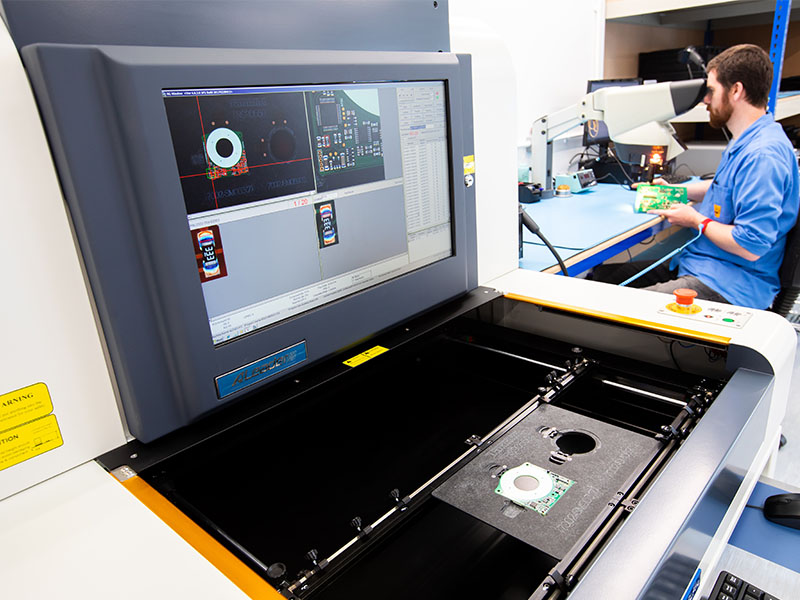
Inspection can reveal component-placement errors, soldering issues and other manufacturing defects that need to be understood before the process progresses. At MPE, PCB assemblies are inspected individually rather than relying only on batch-level checks.
Automated Optical Inspection (AOI) is used where appropriate to assess assembled PCBs against defined parameters and identify potential defects. Inspection requirements can then be incorporated into the production process alongside any customer-specific testing.
For assemblies used in high-reliability applications, these controls are particularly important. Quality problems are considerably easier to contain within a small prototype batch than after a product has entered wider manufacture.
Reduce the Cost and Risk of Production Errors
All of these checks lead to one important commercial benefit: problems being identified while quantities remain low.
Consider a business preparing to order hundreds of PCB assemblies. If the BOM contains an incorrect part or the PCB footprint creates an assembly problem, committing directly to the full quantity could mean unnecessary component costs, rework, replacement PCBs and production delays.
Building ten units first limits that risk. The customer and manufacturer can identify the problem, update the manufacturing information and prove the correction before a larger commitment is made.
Prototype PCB assembly therefore creates a controlled environment in which engineering changes are less disruptive and financially easier to manage.
Improve Quality and Consistency at Scale
Reducing individual problems is important, but the wider aim is to establish a stable manufacturing process.
Information gathered during prototyping can be incorporated into manufacturing documentation, inspection requirements and future production instructions. This helps ensure the manufacturer is working from controlled and accurate information when repeat orders begin.
For procurement teams, that provides greater confidence that future batches can be supplied consistently. For engineers, it means fewer unresolved manufacturing questions remain once the product moves beyond development.
How Do You Know When a PCB Prototype Is Ready for Production?
After the prototype has been built and reviewed, the decision to scale should be based on more than whether the product switches on.
A production-ready design should have a confirmed BOM, correct manufacturing and assembly information, verified PCB footprints and an agreed inspection and testing process. Any issues identified during the prototype build should have been documented, resolved and reflected in the latest controlled files.
Component availability also needs to support the intended production quantities. Where parts are approaching end of life, subject to extended lead times or difficult to source consistently, those risks should be understood before orders are increased.
Most importantly, the assembly process should be repeatable. The manufacturer should understand how the product will be assembled, inspected and tested without relying on workarounds that only made a small prototype batch possible.
For products where reliability is critical, this disciplined approach supports both quality and traceability. MPE’s quality processes include IPC-A-610-trained personnel and an ISO 9001:2015 quality management framework.
Moving From PCB Prototype to Full-Scale Production
Once those conditions have been met, the product can move towards production with considerably more information behind the decision.
The next stage is about transferring what has been learned during prototyping into a controlled manufacturing process. Documentation must remain current, purchasing requirements need to reflect production demand, and inspection and testing requirements must be clearly defined.
It is also important not to treat the transition as an automatic jump from ten assemblies to hundreds or thousands. Depending on the product, a secondary prototype or pre-production batch may be appropriate before quantities increase further.
Our guide to moving from prototype to production explores the manufacturing and supply-chain challenges involved in scaling an assembly in more detail.
Working with the same manufacturing partner during prototyping and production can also help preserve knowledge. Issues identified during the first builds, customer decisions and agreed production controls can be carried forward rather than rediscovered after the project changes supplier.
PCB Prototyping and Manufacturing With MPE Electronics
Ultimately, effective PCB prototyping gives product designers, procurement teams and manufacturers the opportunity to resolve uncertainty before it becomes production risk.
At MPE Electronics, we support prototype and production builds through a structured New Product Introduction process. Customers may approach us for an initial batch of only a few assemblies, allowing their engineering team to continue product development while we identify practical assembly or production issues.
We record issues discovered during these builds and communicate them back to the customer, whether they relate to the BOM, component footprints, component availability or PCB manufacturing information. The aim is straightforward: help establish a reliable and repeatable assembly process before larger quantities are committed.
When production begins, our PCB assembly services combine controlled procurement, inspection, traceability and testing with the flexibility to support changing production requirements.
If you are preparing a new electronic product for production, contact our specialist team to discuss your PCB assembly, prototype PCB assembly or box build requirements.
