
NPI Electronics Manufacturing
Taking Electronic Products from Development Into Production
Taking an electronic product from development into production requires more than a functional prototype. Manufacturing challenges, supply chain issues and documentation gaps can all create delays, quality concerns and unexpected costs if they are not identified early.
At MPE Electronics, our NPI process helps OEMs and product designers transition products into controlled, repeatable manufacture with greater confidence. We support projects from prototype through to production using documented processes, inspection controls and clear technical communication throughout.
What Is NPI in Electronics Manufacturing?
NPI (New Product Introduction) is the process of preparing an electronic product for manufacture.
It bridges the gap between product development and full production by reviewing manufacturing requirements, validating assembly processes and identifying risks before volume builds begin.
The NPI process typically includes:
Design for Manufacture (DFM) checks
Manufacturing data review
Component and supply chain assessment
Prototype and pilot builds
Inspection and testing validation
Production readiness reviews
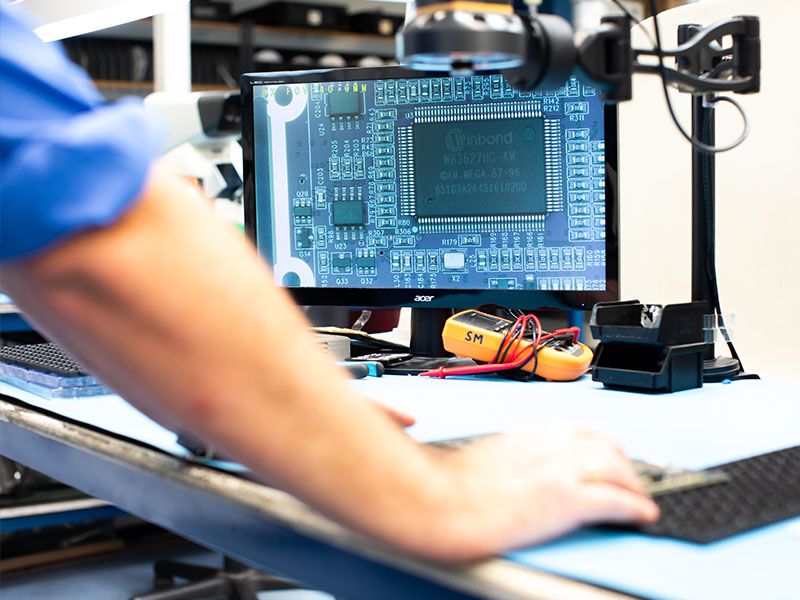
The NPI Electronics Manufacturing Process
The NPI electronics manufacturing process involves the following stages:
Review – when manufacturing data, Bill of Materials (BOM), PCB layouts and assembly requirements are reviewed
Prototype – when initial assemblies are built in order to validate manufacturability
Test – when inspection, AOI and functional validation checks are carried out
Pilot – when processes are refined, build issues identified and production readiness is confirmed
Production – when controlled, repeatable manufacturing commences with established inspection and traceability processes in place
Why the New Product Introduction Process Matters
Products that perform correctly during development can still create problems during manufacturing.
Common issues identified during NPI include:
Missing manufacturing documentation
Component availability problems
PCB layouts that complicate assembly
Additional tooling requirements
Test access limitations
A controlled new product introduction process helps reduce:
Rework and scrap
Production delays
Supply chain disruption
Compliance risks
Long-term reliability issues
Design for Manufacture (DFM) Support
Typical DFM considerations include:
Component spacing and placement
Solderability
Panelisation suitability
Assembly accessibility
Thermal considerations
Test point access
Prototype and Pilot Builds
Assembly methods
Build documentation
Component selection
Test procedures
Production repeatability
At MPE Electronics, findings are documented and communicated clearly throughout the process so customers can make informed decisions quickly.
Inspection, Testing and Traceability
Key quality controls include:
Automated Optical Inspection (AOI)
IPC-trained assembly personnel
Individual PCB inspection
Controlled procurement processes
Traceability throughout production
Documented inspection procedures
Why Choose MPE Electronics for NPI Electronics Manufacturing?
Key proof points:
IPC-trained production team
Established quality management systems
Structured pilot build and DFM processes
Full traceability throughout production
Average team tenure of approximately 11 years
Experience across medical, industrial and safety-critical sectors
In-house capabilities:
Through-hole assembly (THT)
Automated Optical Inspection (AOI)
Full box-build assembly
Prototype to production support
Controlled component procurement
A key to successful NPI
Obsolete or unavailable components
Missing assembly instructions
Additional crimp tooling requirements
PCB layouts requiring assembly adjustments
Test accessibility concerns
By identifying these issues during NPI, changes can be made before full production begins, helping reduce delays, rework and quality risks later.
Start Your NPI Project With MPE Electronics
Moving a product from development into manufacture requires clear communication, controlled processes and reliable production support.
MPE Electronics helps OEMs reduce manufacturing risk through structured NPI processes, detailed inspection and dependable PCB assembly services.
Speak to our team to discuss your prototype, pilot build or production requirements.
